
Now Reading: Pauline Hanson’s Latest Interviews Reignite Political Debate
-
01
Pauline Hanson’s Latest Interviews Reignite Political Debate

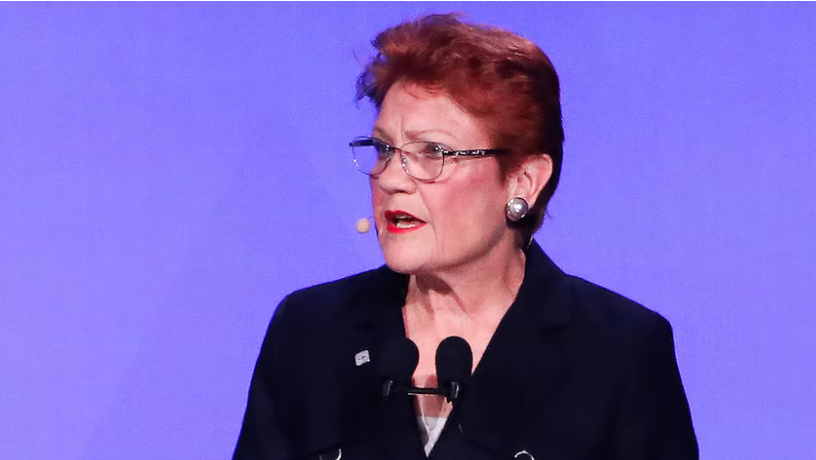
Pauline Hanson has returned to the centre of Australian political debate following a series of interviews covering immigration, domestic violence, media criticism and political donations.
One of the most controversial appearances came during Hanson’s European trip, when she joined British activist Tommy Robinson for an hour-long podcast. During the conversation, Hanson linked Australia’s migration problems to the end of the White Australia policy and claimed—without presenting evidence—that some migrants came primarily to access welfare programs.
She also discussed cultural integration, the National Disability Insurance Scheme and the future leadership of One Nation. The interview attracted criticism from politicians across Australia because of both Hanson’s comments and Robinson’s political reputation. ABC News reported on the podcast and its political reaction.
Hanson later defended her decision to participate. She said she was willing to speak with controversial figures to understand their views and insisted she was “not backing away” from the appearance. At the same time, she denied supporting the return of the White Australia policy. ABC’s follow-up coverage detailed her response.
Questions also followed Hanson’s return from Europe. She said the journey had not cost Australian taxpayers, but initially declined to identify who had financed parts of the trip. Her appearances alongside billionaire mining executive Gina Rinehart once again raised questions about the relationship between major political donors and party leaders. ABC reported that third-party funding would need to be declared under parliamentary rules.
Another interview created an even more immediate backlash. Speaking to Brisbane radio station 4BC, Hanson described domestic violence as a “two-way street” and connected family tensions with cost-of-living pressure, unemployment and financial stress.
Hanson also said that women experiencing abuse should not remain in unsafe homes. Domestic violence advocates criticised this framing, arguing that leaving an abusive relationship can be extremely dangerous and may be complicated by financial dependence, housing shortages and coercive control.
Hanson later accused sections of the media of taking her remarks out of context. She maintained that she had described domestic violence as a serious problem and encouraged people to listen to the complete interview. SBS News covered both the original remarks and her response.
Her recent interviews also reveal a broader political pattern. Hanson frequently presents herself as an outsider willing to discuss subjects that other politicians avoid. Supporters view this approach as direct and authentic. Critics argue that her language can oversimplify complex social issues and turn unsupported claims into national controversies.
In an earlier wide-ranging SBS interview, Hanson confirmed that she discusses policy matters with Rinehart but denied that the billionaire influences One Nation’s positions. She said the donated aircraft associated with Rinehart’s support would help the party visit regional communities. The SBS interview also covered migration, Muslim candidates and political donations.
Taken together, Hanson’s latest interviews demonstrate how effectively she turns media appearances into major political events. The subjects may change, but the pattern remains familiar: a provocative statement generates widespread attention, critics respond, and Hanson accuses the media or political establishment of misrepresenting her.
Whether this strategy expands One Nation’s support or creates new political risks will become clearer over time. What is already certain is that Hanson’s interviews continue to influence Australia’s national conversation long after the cameras and microphones are turned off.